“We live in a world where there is more and more information, and less and less meaning. Images no longer mirror reality but rather create a reality of their own. In this way, reality itself becomes a kind of simulation, an endless aesthetic performance where the sign becomes more important than what it signifies.”
– Jean Baudrillard, Simulacra and Simulations
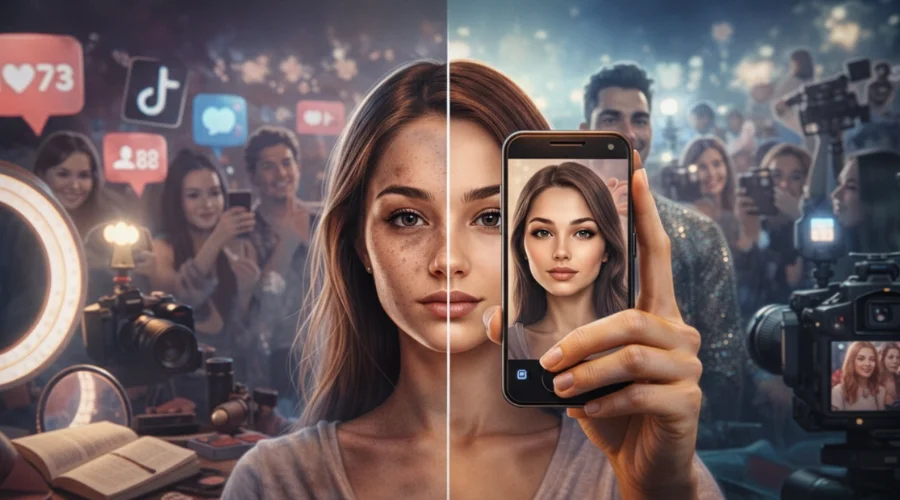
In an age dominated by filters, curated feeds, and viral fame, reality is increasingly shaped by how it appears on a screen. Social media platforms have transformed aesthetics into currency, rewarding visibility over substance and perfection over authenticity. For many young people, this digital performance has blurred the line between self-expression and self-erasure, leaving behind a quiet but growing crisis of identity. Scroll through any social media application and life feels flawless. Everything seems near to perfect as if it did not have any problem from the beginning. Filters and editing tools make everything polished from its raw form. This is all creating a world of simulation, hiding its real essence.
Youngsters these days are ready to alter their lifestyle, their face, their homes, and even how they appear online based upon the parameters set by social influences. The curated feeds and viral trends shape how they speak and dress. The more one attempts to engage them with the real world, the more they seem to gravitate towards the alluring world of the internet. Instead of discovering their actual being, they are ready to become models and personalities totally influenced by online performers and celebrities. The digital world becomes the mirror they constantly look into, not to understand themselves, but to fit into what appears popular and appealing.
Filters play a vital role not only to smooth the texture of your features but to create a reality that never exists. An ordinary person is trying hard to appear what is far from original just to be admired enough. Young minds often feel inadequate when their real life fails to meet the standard of the glamorous online world. Jealousy, low self-esteem, and anxiety increase when people measure themselves against the edited and polished realities.
“Social media is training us to compare our lives, instead of appreciating everything we are.”
– Bill Murray
When aesthetics dominate life, depth slowly disappears. The conversation is getting shorter and the attention span is getting weaker because of this artificial beauty as well. Real relationships are often replaced by virtual interactions and conversations. Knowledge is gathered from quick videos rather than spending worthwhile time on readings and books. In chasing what looks attractive, youngsters are at high risk of losing genuine connection, critical thinking, and emotional authenticity.
The internet dulls the bright mind; even established experts are ensnared in this fascinating but worthless environment. Social media itself is not harmful or an enemy, but the way it has been utilized creates an illusion that deserves reflection. A world built on appearances and fake realities can never fully satisfy the human need for meaning and connection. As images are taking the place of reality, it becomes increasingly important to pause and question what is real and what is merely curated. Perhaps, true beauty lies not in perfection but in imperfection itself, which makes an identity that attracts human emotions, as nobody is entirely flawless in this world.